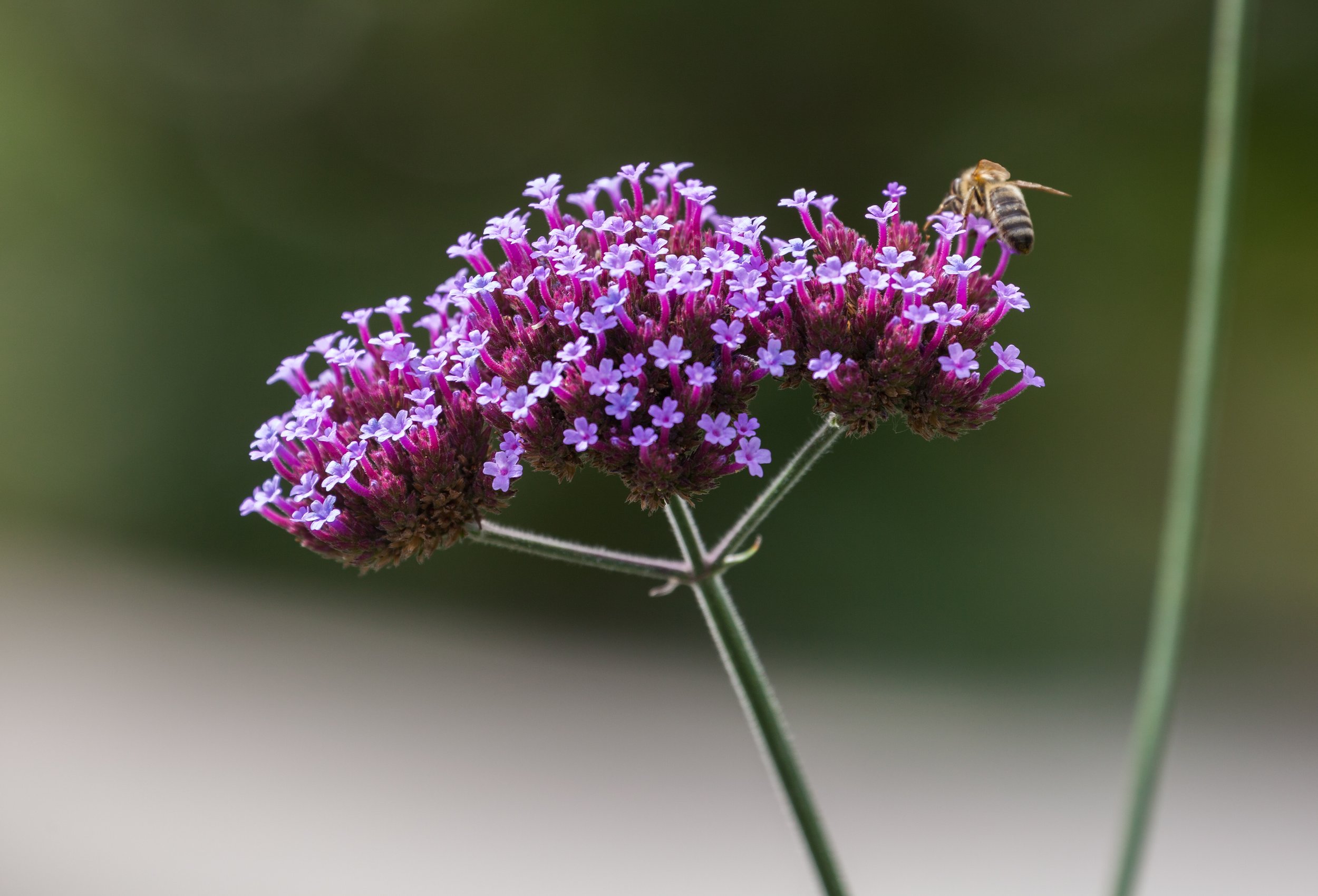
Verbena (Verbena spp. and Glandularia spp.)
Light Requirements
Full sun is best: at least 6–8 hours of direct sunlight daily. Verbena tolerates light afternoon shade in very hot climates but blooms most prolifically in bright sun.
Soil Requirements
Well-draining soil is essential. Verbena prefers sandy or loamy soils with moderate fertility.
Neutral to slightly alkaline pH is tolerated; avoid heavy clay that stays wet. Amending clay with compost and grit improves drainage.
Watering Requirements
Drought-tolerant once established. Water regularly during the first growing season to establish roots.
After established, deep watering every 7–14 days is usually sufficient; increase frequency in extreme heat. Avoid overwatering and soggy soil, which promote root rot.
Care
Deadhead spent flowers regularly to encourage continuous blooming. For trailing varieties, light pruning maintains shape and vigor.
In late season or early spring, shearing back by about one-third can rejuvenate plants and encourage new growth.
Provide good air circulation to reduce powdery mildew and other fungal issues; avoid overhead watering when possible.
Fertilize lightly with a balanced, slow-release or water-soluble fertilizer during the growing season; excessive nitrogen can reduce flowering.
Pests are generally minor (aphids, spider mites); treat infestations early with insecticidal soap or horticultural oil. Watch for fungal disease in humid conditions.
Hardiness Zone
Most verbena and related species (including Glandularia) are hardy in USDA zones 7–10. Some cultivars and species may be grown as perennials in zone 6 with winter protection or as annuals in cooler zones.
Best Companion Plants Verbena pairs well with other sun-loving, drought-tolerant natives and ornamentals. Good companions include:
Horsemint (Monarda spp.) — complementary flower forms and attracts pollinators.
Mexican Hat (Ratibida columnifera) — similar cultural needs and contrasting flower shape.
Winecup (Callirhoe involucrata) — trailing habit mixes well with low-growing verbenas.
Plains Coreopsis (Coreopsis tinctoria) — bright, long-blooming partner with similar watering needs.
Antelope Horns (Asclepias asperula) — native milkweed attracts pollinators and shares dry-site preferences.
Plains White Indigo (Baptisia alba or related Baptisia spp.) — sturdier, taller companion that provides structure; tolerant of similar soils once established.
Standing cypress (Ipomopsis rubra or possibly Liatris? — if you mean a tall, upright native) — provides
Verbena (Verbena spp. and Glandularia spp.)
Light Requirements
Full sun is best: at least 6–8 hours of direct sunlight daily. Verbena tolerates light afternoon shade in very hot climates but blooms most prolifically in bright sun.
Soil Requirements
Well-draining soil is essential. Verbena prefers sandy or loamy soils with moderate fertility.
Neutral to slightly alkaline pH is tolerated; avoid heavy clay that stays wet. Amending clay with compost and grit improves drainage.
Watering Requirements
Drought-tolerant once established. Water regularly during the first growing season to establish roots.
After established, deep watering every 7–14 days is usually sufficient; increase frequency in extreme heat. Avoid overwatering and soggy soil, which promote root rot.
Care
Deadhead spent flowers regularly to encourage continuous blooming. For trailing varieties, light pruning maintains shape and vigor.
In late season or early spring, shearing back by about one-third can rejuvenate plants and encourage new growth.
Provide good air circulation to reduce powdery mildew and other fungal issues; avoid overhead watering when possible.
Fertilize lightly with a balanced, slow-release or water-soluble fertilizer during the growing season; excessive nitrogen can reduce flowering.
Pests are generally minor (aphids, spider mites); treat infestations early with insecticidal soap or horticultural oil. Watch for fungal disease in humid conditions.
Hardiness Zone
Most verbena and related species (including Glandularia) are hardy in USDA zones 7–10. Some cultivars and species may be grown as perennials in zone 6 with winter protection or as annuals in cooler zones.
Best Companion Plants Verbena pairs well with other sun-loving, drought-tolerant natives and ornamentals. Good companions include:
Horsemint (Monarda spp.) — complementary flower forms and attracts pollinators.
Mexican Hat (Ratibida columnifera) — similar cultural needs and contrasting flower shape.
Winecup (Callirhoe involucrata) — trailing habit mixes well with low-growing verbenas.
Plains Coreopsis (Coreopsis tinctoria) — bright, long-blooming partner with similar watering needs.
Antelope Horns (Asclepias asperula) — native milkweed attracts pollinators and shares dry-site preferences.
Plains White Indigo (Baptisia alba or related Baptisia spp.) — sturdier, taller companion that provides structure; tolerant of similar soils once established.
Standing cypress (Ipomopsis rubra or possibly Liatris? — if you mean a tall, upright native) — provides