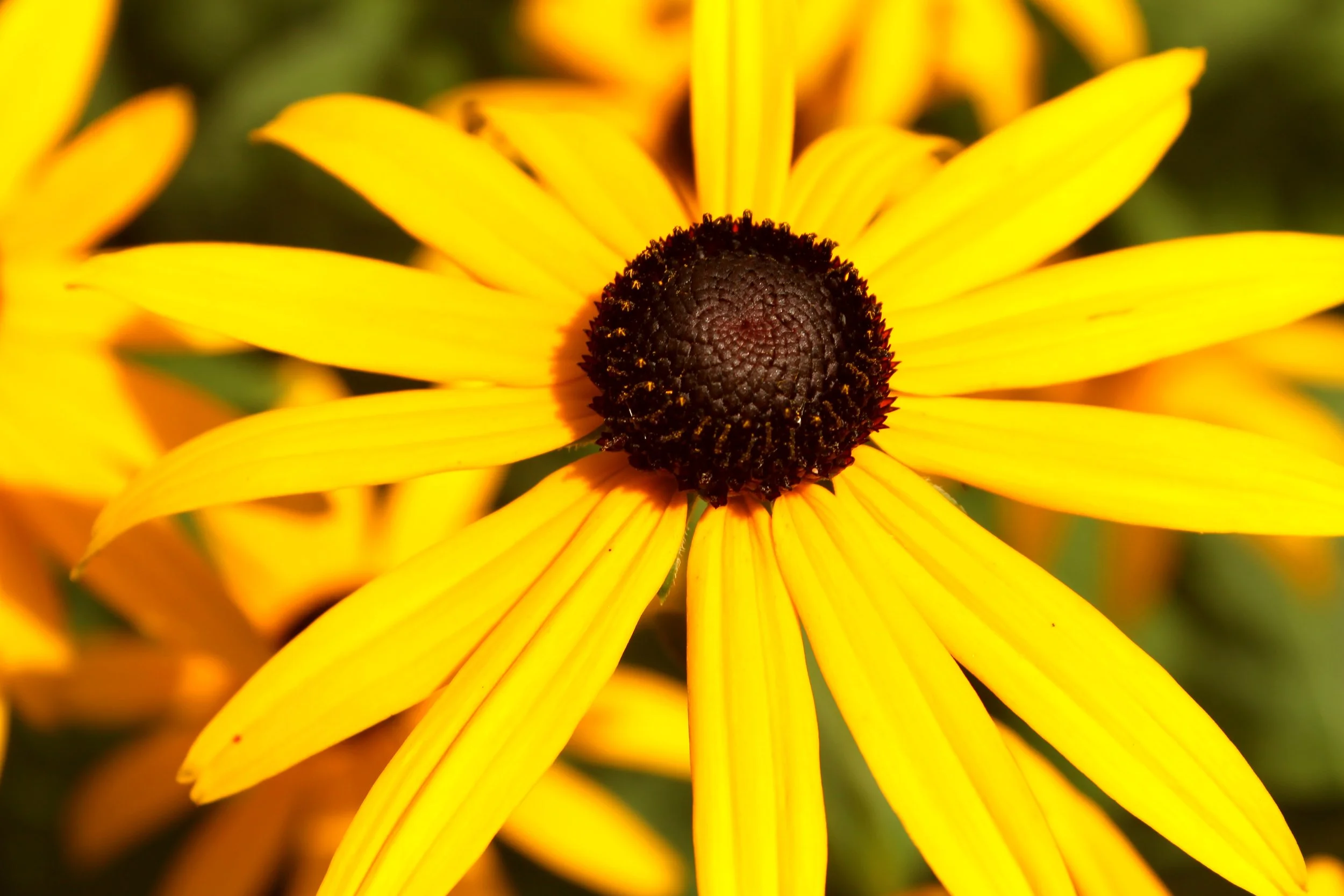
Black-Eyed Susan - Rudbeckia hirta
Light Requirements
Full sun is best: at least 6–8 hours of direct sunlight daily.
Tolerates light afternoon shade in very hot climates, but flowering may be reduced.
Soil Requirements
Prefers well-drained soil.
Adaptable to a wide range of soils including sandy, loamy, and clay soils.
Performs best in moderately fertile soil; overly rich soil can lead to floppy growth.
pH: tolerates slightly acidic to neutral (about 6.0–7.5).
Watering Requirements
Establishment: water regularly during the first 2–3 months so roots develop (about 1 inch per week depending on climate).
Once established: drought-tolerant and prefers occasional deep watering rather than frequent shallow watering.
Avoid waterlogged soil; good drainage is important to prevent crown rot.
Care
Deadhead spent blooms to encourage continuous flowering and prolong bloom period.
Divide clumps every 3–4 years in spring or fall if plants become overcrowded or decline.
Cut back to 4–6 inches in late fall or early spring to tidy up and reduce disease risk.
Mulch 2–3 inches around plants to conserve moisture and suppress weeds, keeping mulch away from crowns.
Monitor for common pests and diseases: aphids, leaf spot, powdery mildew; provide good air circulation and avoid overhead watering to reduce problems.
Many Rudbeckia are short-lived perennials or biennials in some regions; allow self-seeding for continued presence in the garden.
Zone
USDA Hardiness Zones: typically zones 3–9 depending on the variety/cultivar.
Best Companion Plants
Coneflowers (Echinacea) — complementary height and bloom time, similar culture.
Salvia and Russian Sage — contrasting foliage and vertical form.
Ornamental grasses (e.g., little bluestem, fountain grass) — add texture and movement.
Asters — extend the late-season color palette.
Coreopsis and Gaillardia — similar sun and soil needs, bright color combinations.
Lavender and Catmint (Nepeta) — drought-tolerant companions that attract pollinators.
Native wildflowers and native grasses for prairie-style plantings and pollinator habitat.
Black-Eyed Susans are easy, cheerful additions to borders, meadows, and pollinator gardens—low-maintenance, drought-tolerant, and great for providing summer–fall color.
Black-Eyed Susan - Rudbeckia hirta
Light Requirements
Full sun is best: at least 6–8 hours of direct sunlight daily.
Tolerates light afternoon shade in very hot climates, but flowering may be reduced.
Soil Requirements
Prefers well-drained soil.
Adaptable to a wide range of soils including sandy, loamy, and clay soils.
Performs best in moderately fertile soil; overly rich soil can lead to floppy growth.
pH: tolerates slightly acidic to neutral (about 6.0–7.5).
Watering Requirements
Establishment: water regularly during the first 2–3 months so roots develop (about 1 inch per week depending on climate).
Once established: drought-tolerant and prefers occasional deep watering rather than frequent shallow watering.
Avoid waterlogged soil; good drainage is important to prevent crown rot.
Care
Deadhead spent blooms to encourage continuous flowering and prolong bloom period.
Divide clumps every 3–4 years in spring or fall if plants become overcrowded or decline.
Cut back to 4–6 inches in late fall or early spring to tidy up and reduce disease risk.
Mulch 2–3 inches around plants to conserve moisture and suppress weeds, keeping mulch away from crowns.
Monitor for common pests and diseases: aphids, leaf spot, powdery mildew; provide good air circulation and avoid overhead watering to reduce problems.
Many Rudbeckia are short-lived perennials or biennials in some regions; allow self-seeding for continued presence in the garden.
Zone
USDA Hardiness Zones: typically zones 3–9 depending on the variety/cultivar.
Best Companion Plants
Coneflowers (Echinacea) — complementary height and bloom time, similar culture.
Salvia and Russian Sage — contrasting foliage and vertical form.
Ornamental grasses (e.g., little bluestem, fountain grass) — add texture and movement.
Asters — extend the late-season color palette.
Coreopsis and Gaillardia — similar sun and soil needs, bright color combinations.
Lavender and Catmint (Nepeta) — drought-tolerant companions that attract pollinators.
Native wildflowers and native grasses for prairie-style plantings and pollinator habitat.
Black-Eyed Susans are easy, cheerful additions to borders, meadows, and pollinator gardens—low-maintenance, drought-tolerant, and great for providing summer–fall color.