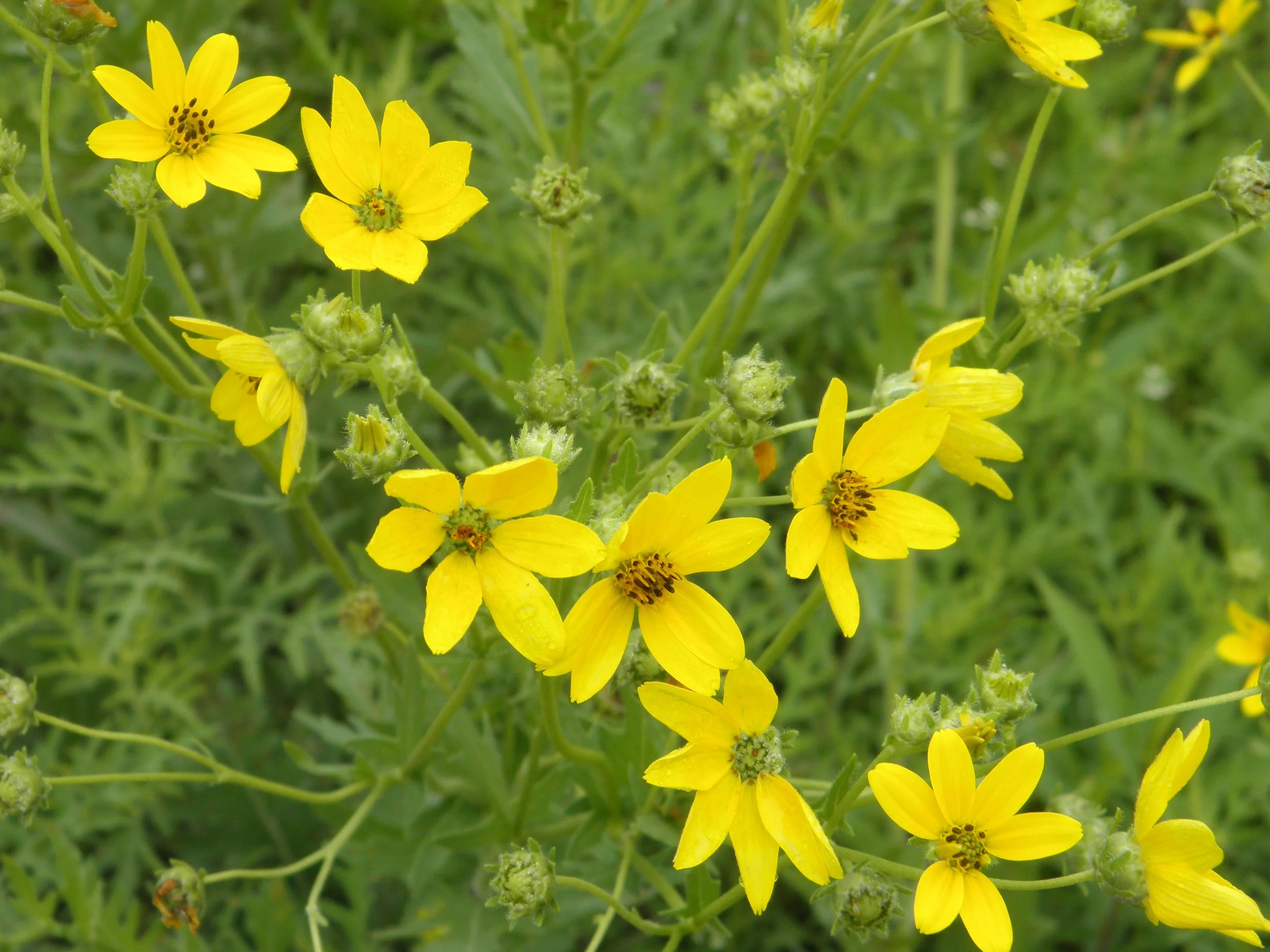
Engelmann Daisy (Engelmannia peristenia)
Light Requirements
Full sun is ideal: at least 6–8 hours of direct sunlight daily for best flowering.
Tolerates light afternoon shade in very hot, inland sites but will produce fewer blooms.
Soil Requirements
Prefers well-draining soils; sandy or rocky loam suits it well.
Tolerates poor, low-fertility soils; does not need rich, amended soils.
Neutral to slightly alkaline pH performs well; avoid heavy clay that holds water.
Watering Requirements
Drought-tolerant once established.
Water moderately during the first growing season to develop roots (deep, infrequent watering).
After established, water only during extended dry spells; overwatering reduces blooms and can encourage rot.
Care
Low-maintenance perennial or short-lived perennial/long-lived biennial depending on climate.
Deadhead spent flowers to encourage continued bloom and reduce reseeding, although some self-seeding is common and often desirable.
Cut back spent stems in late fall or mow/trim in early spring to tidy plants and promote fresh growth.
Divide clumps every 3–4 years if they become congested, or to propagate.
Minimal fertilizer needed; a light application of balanced fertilizer in spring is sufficient if soil is very poor.
Watch for slugs and snails in shady, moist locations; generally pest and disease resistant.
Zone
Hardy primarily in USDA zones 5–9, depending on local microclimate (cold-hardiness can vary; in colder zone 5 sites, mulch for winter protection if needed).
Best Companion Plants
Other Texas and prairie natives that match its sun, soil, and moisture needs:
Black-eyed Susan (Rudbeckia hirta)
Gaillardia (Blanket Flower)
Salvia spp. (meadow and prairie salvias)
Coreopsis spp.
Texas sage (Leucophyllum frutescens) in hotter, drier sites
Little bluestem (Schizachyrium scoparium) and other native grasses for textural contrast
Penstemon spp. and Liatris for vertical accents and pollinator attraction
Engelmann Daisy is a durable, pollinator-friendly choice for sunny, well-drained beds, meadows, and naturalistic plantings where low water use and a long season of flowers are desired.
Engelmann Daisy (Engelmannia peristenia)
Light Requirements
Full sun is ideal: at least 6–8 hours of direct sunlight daily for best flowering.
Tolerates light afternoon shade in very hot, inland sites but will produce fewer blooms.
Soil Requirements
Prefers well-draining soils; sandy or rocky loam suits it well.
Tolerates poor, low-fertility soils; does not need rich, amended soils.
Neutral to slightly alkaline pH performs well; avoid heavy clay that holds water.
Watering Requirements
Drought-tolerant once established.
Water moderately during the first growing season to develop roots (deep, infrequent watering).
After established, water only during extended dry spells; overwatering reduces blooms and can encourage rot.
Care
Low-maintenance perennial or short-lived perennial/long-lived biennial depending on climate.
Deadhead spent flowers to encourage continued bloom and reduce reseeding, although some self-seeding is common and often desirable.
Cut back spent stems in late fall or mow/trim in early spring to tidy plants and promote fresh growth.
Divide clumps every 3–4 years if they become congested, or to propagate.
Minimal fertilizer needed; a light application of balanced fertilizer in spring is sufficient if soil is very poor.
Watch for slugs and snails in shady, moist locations; generally pest and disease resistant.
Zone
Hardy primarily in USDA zones 5–9, depending on local microclimate (cold-hardiness can vary; in colder zone 5 sites, mulch for winter protection if needed).
Best Companion Plants
Other Texas and prairie natives that match its sun, soil, and moisture needs:
Black-eyed Susan (Rudbeckia hirta)
Gaillardia (Blanket Flower)
Salvia spp. (meadow and prairie salvias)
Coreopsis spp.
Texas sage (Leucophyllum frutescens) in hotter, drier sites
Little bluestem (Schizachyrium scoparium) and other native grasses for textural contrast
Penstemon spp. and Liatris for vertical accents and pollinator attraction
Engelmann Daisy is a durable, pollinator-friendly choice for sunny, well-drained beds, meadows, and naturalistic plantings where low water use and a long season of flowers are desired.