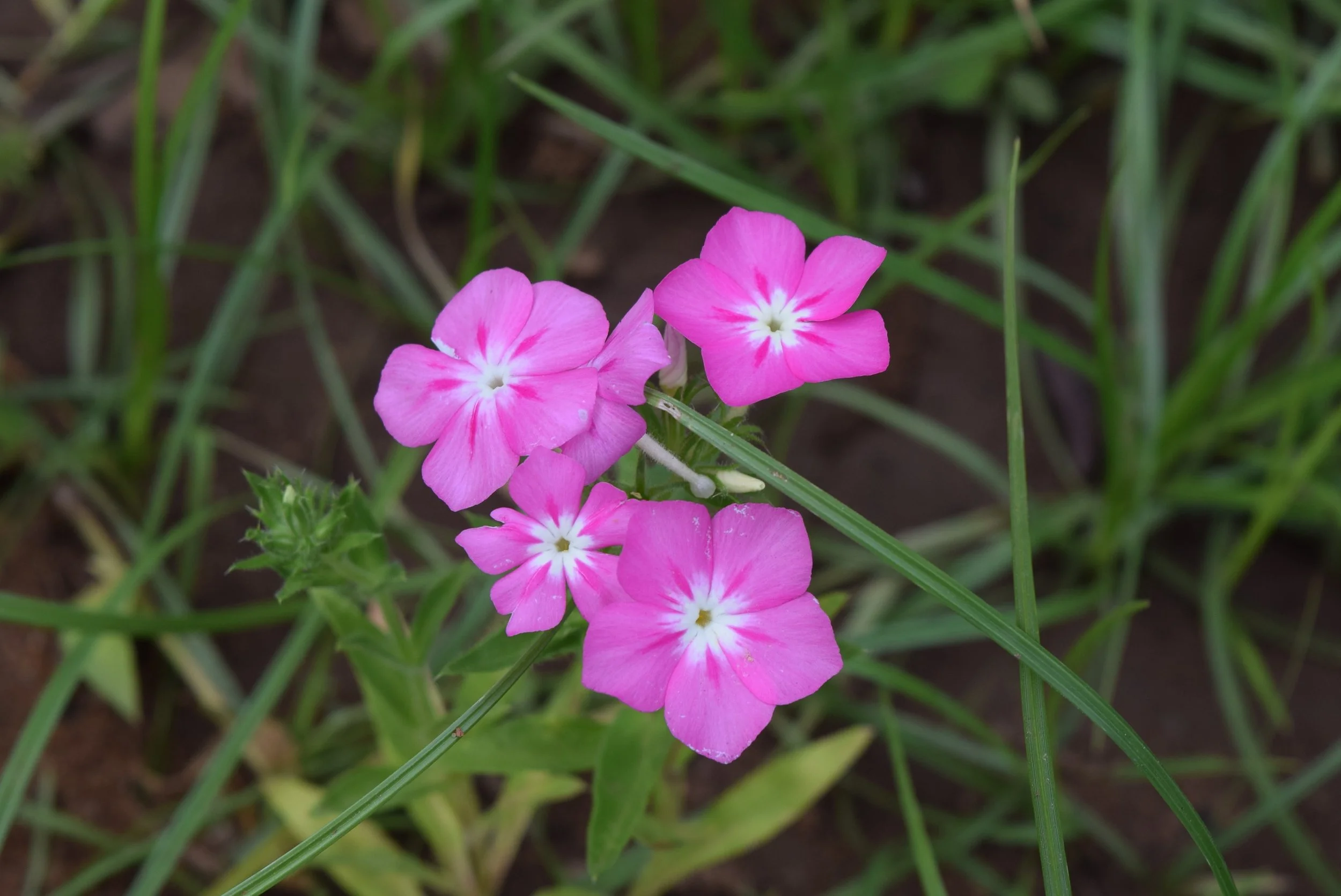
Drummond Phlox (Phlox drummondii)
Light Requirements
Full sun to partial shade. Best flowering and compact habit occur in full sun (at least 6 hours daily). In hotter climates, afternoon shade helps prevent blooming decline and leaf scorch.
Soil Requirements
Well-drained soil is essential. Tolerates a range from sandy to loamy soils. Prefers moderately fertile soil with good organic matter. Neutral to slightly acidic pH (around 6.0–7.0) is ideal. Avoid heavy, waterlogged clay unless amended for drainage.
Watering Requirements
Moderate water needs. Keep roots evenly moist during establishment and active growth; allow the top inch of soil to dry between waterings. More frequent watering during hot, dry spells will maintain bloom. Avoid prolonged wet feet to prevent root rot.
Care
Deadhead spent blooms regularly to encourage continuous flowering and a tidier appearance.
Pinch back young plants to promote bushier growth and more blooms.
Light feeding with a balanced, slow-release fertilizer in spring supports vigorous growth; a second, lighter feed midseason can help in poor soils.
Provide good air circulation to reduce powdery mildew and other fungal issues; remove affected foliage promptly.
Re-seed or replace plants annually or every few years in landscapes where they appear short-lived; in favorable conditions, they may self-seed.
Mulch lightly to conserve moisture and suppress weeds but keep mulch off crowns to avoid rot.
Zone
Typically grown as an annual in most gardens; USDA hardiness zones 6–9 are most favorable for overwintering as a perennial, though survival varies. In cooler zones (zones 3–5) it is used as an annual or for summer bedding. Check local microclimate and cultivar hardiness for best results.
Best Companion Plants
Other annuals and perennials that enjoy similar sun and soil conditions and complement phlox height and color:
Coreopsis (Coreopsis spp.) — similar drought tolerance and cheerful contrast.
Coreopsis and Gaillardia (blanketflower) — warm, sun-loving color partners.
Salvia (Salvia spp.) — vertical spikes contrast phlox’s mounded form.
Alyssum (Lobularia maritima) — low edging plant that highlights drummond phlox beds.
Verbena (Verbena spp.) — mixes well for cottage-style or pollinator gardens.
Lavender (Lavandula spp.) — pairs well in well-drained soils with similar sun needs.
Echinacea (Echinacea spp.) and Rudbeckia (Rudbeckia spp.) — taller perennials that provide structural backdrop.
Drummond phlox is also excellent in mixed annual borders, rock gardens, and pollinator-friendly plantings where its nectar attracts butterflies and bees.
Notes
Many cultivars and color forms are available; choose varieties suited to your climate and desired height. In Texas summers, select heat-tolerant cultivars and provide afternoon shade where necessary.
Drummond Phlox (Phlox drummondii)
Light Requirements
Full sun to partial shade. Best flowering and compact habit occur in full sun (at least 6 hours daily). In hotter climates, afternoon shade helps prevent blooming decline and leaf scorch.
Soil Requirements
Well-drained soil is essential. Tolerates a range from sandy to loamy soils. Prefers moderately fertile soil with good organic matter. Neutral to slightly acidic pH (around 6.0–7.0) is ideal. Avoid heavy, waterlogged clay unless amended for drainage.
Watering Requirements
Moderate water needs. Keep roots evenly moist during establishment and active growth; allow the top inch of soil to dry between waterings. More frequent watering during hot, dry spells will maintain bloom. Avoid prolonged wet feet to prevent root rot.
Care
Deadhead spent blooms regularly to encourage continuous flowering and a tidier appearance.
Pinch back young plants to promote bushier growth and more blooms.
Light feeding with a balanced, slow-release fertilizer in spring supports vigorous growth; a second, lighter feed midseason can help in poor soils.
Provide good air circulation to reduce powdery mildew and other fungal issues; remove affected foliage promptly.
Re-seed or replace plants annually or every few years in landscapes where they appear short-lived; in favorable conditions, they may self-seed.
Mulch lightly to conserve moisture and suppress weeds but keep mulch off crowns to avoid rot.
Zone
Typically grown as an annual in most gardens; USDA hardiness zones 6–9 are most favorable for overwintering as a perennial, though survival varies. In cooler zones (zones 3–5) it is used as an annual or for summer bedding. Check local microclimate and cultivar hardiness for best results.
Best Companion Plants
Other annuals and perennials that enjoy similar sun and soil conditions and complement phlox height and color:
Coreopsis (Coreopsis spp.) — similar drought tolerance and cheerful contrast.
Coreopsis and Gaillardia (blanketflower) — warm, sun-loving color partners.
Salvia (Salvia spp.) — vertical spikes contrast phlox’s mounded form.
Alyssum (Lobularia maritima) — low edging plant that highlights drummond phlox beds.
Verbena (Verbena spp.) — mixes well for cottage-style or pollinator gardens.
Lavender (Lavandula spp.) — pairs well in well-drained soils with similar sun needs.
Echinacea (Echinacea spp.) and Rudbeckia (Rudbeckia spp.) — taller perennials that provide structural backdrop.
Drummond phlox is also excellent in mixed annual borders, rock gardens, and pollinator-friendly plantings where its nectar attracts butterflies and bees.
Notes
Many cultivars and color forms are available; choose varieties suited to your climate and desired height. In Texas summers, select heat-tolerant cultivars and provide afternoon shade where necessary.