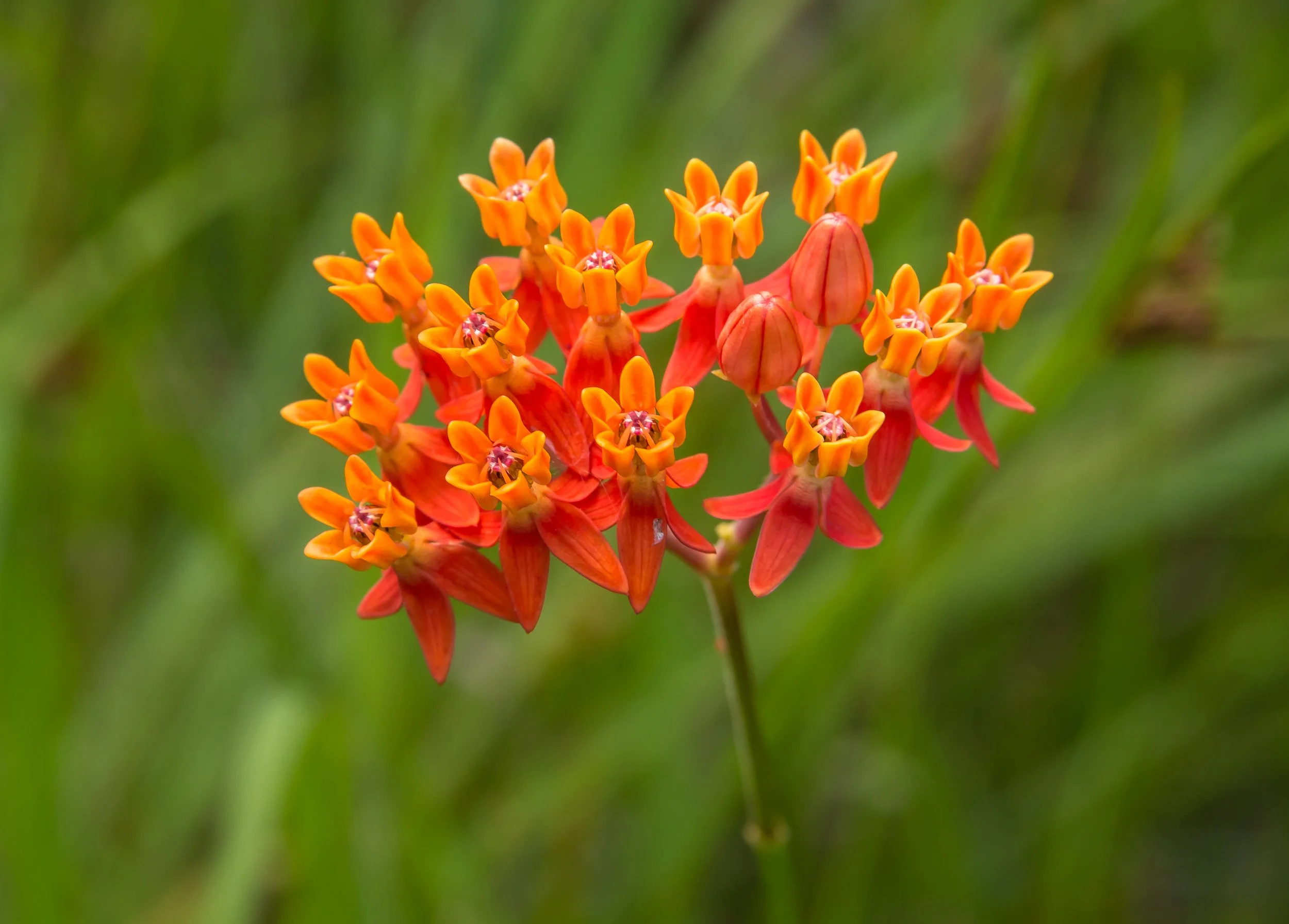
Butterfly Milkweed
Butterfly Milkweed (Asclepias tuberosa)
Overview Butterfly Milkweed, Asclepias tuberosa, is a native North American perennial known for its vibrant orange (sometimes yellow or red) clusters of flowers and its importance to pollinators, especially monarch butterflies. Unlike some other milkweeds, it has a low, clumping form with deep taproots and does not produce the milky sap as copiously, making it an attractive, durable choice for native gardens, prairie restorations, and pollinator plantings.
Light
Full sun is ideal: at least 6–8 hours of direct sunlight daily.
Tolerates light afternoon shade but flowering and vigor decline in shady spots.
Soil
Prefers well-drained soils; intolerant of persistent wet feet.
Tolerates poor, sandy, rocky, or lean soils; thrives in low-fertility conditions.
pH: adaptable from slightly acidic to slightly alkaline (roughly pH 6.0–7.5).
Avoid heavy clay that stays saturated unless amended or on raised beds/berms to improve drainage.
Watering
Drought-tolerant once established, thanks to a deep taproot.
Water regularly during the first growing season to establish roots: about 1 inch per week (from irrigation or rainfall), allowing soil to dry slightly between waterings.
After established (typically one season), supplemental watering only during extended dry periods; overwatering leads to poor performance and root rot.
Mulch lightly to conserve moisture but keep mulch away from crown to avoid rot.
Care Tips
Planting time: spring after the last frost or fall in mild climates; fall planting helps root development but avoid very late planting that risks frost before establishment.
Spacing: 12–18 inches apart to allow clumping and air circulation.
Fertilizer: generally unnecessary; avoid high-nitrogen fertilizers that encourage foliage over blooms.
Deadheading: remove spent flowers to prolong bloom and prevent self-seeding if you want to control volunteers. Allow some pods to mature if you want seed for propagation or to support monarchs.
Cutting back: cut stems to ground in late fall or leave stalks over winter for structure and insect habitat; remove in early spring if desired.
Division: not easily divided due to deep taproot; propagate by seed or occasional root cuttings.
Pests & diseases: relatively pest-resistant. Watch for aphids, milkweed bugs, or fungal issues in poorly drained soils. Treat aphids with water spray or insecticidal soap if needed, and improve air/drainage for disease prevention.
Winter behavior: herbaceous perennial — tops die back in winter but roots return in spring. In colder zones expect dormancy.
Best Planting Zones
USDA Hardiness Zones: 3–9 (grows reliably across much of Texas).
In Texas specifically: performs well across most regions — East Texas to the Plains, Central Texas, Hill Country, and South Texas coastal areas with attention to drainage and heat. In very hot, humid southeast areas, provide the best full sun and good drainage to avoid stress.
Best Companion Plants (native to Texas) Choose companions that match full sun, well-drained conditions and that support pollinators and seasonal interest:
Texas Lantana (Lantana urticoides / Lantana horrida) — attracts butterflies, heat-tolerant.
Gregg’s Mistflower (Conoclinium greggii) — late-season nectar source, purple-blue flowers.
Prairie Verbena (Glandularia bipinnatifida) — low mounding, purple flowers, drought-tolerant.
Gulf Coast Penstemon (Penstemon tenuis) or other Texas penstemon species — tubular flowers for pollinators.
Black-Eyed Susan (Rudbeckia species) — bright summer bloom, similar cultural needs.
Purple Coneflower (Echinacea purpurea) — summer-fall nectar and seedheads for birds.
Bluebonnet (Lupinus texensis) — spring interest and nitrogen-fixing benefits in prairie mixes.
Texas Sage / Cenizo (Leucophyllum frutescens) — in hotter, drier sites for contrast and late-season blooms.
Little Bluestem (Schizachyrium scoparium) — native grass for texture and winter structure.
Maximilian Sunflower (Helianthus maximiliani) — tall background plant that attracts pollinators.
Milkweed species mix (e.g., Common Milkweed Asclepias syriaca in appropriate regions, Swamp Milkweed Asclepias incarnata in wetter spots) — combining species provides staggered bloom and habitat diversity for monarchs and other specialized insects
Butterfly Milkweed (Asclepias tuberosa)
Overview Butterfly Milkweed, Asclepias tuberosa, is a native North American perennial known for its vibrant orange (sometimes yellow or red) clusters of flowers and its importance to pollinators, especially monarch butterflies. Unlike some other milkweeds, it has a low, clumping form with deep taproots and does not produce the milky sap as copiously, making it an attractive, durable choice for native gardens, prairie restorations, and pollinator plantings.
Light
Full sun is ideal: at least 6–8 hours of direct sunlight daily.
Tolerates light afternoon shade but flowering and vigor decline in shady spots.
Soil
Prefers well-drained soils; intolerant of persistent wet feet.
Tolerates poor, sandy, rocky, or lean soils; thrives in low-fertility conditions.
pH: adaptable from slightly acidic to slightly alkaline (roughly pH 6.0–7.5).
Avoid heavy clay that stays saturated unless amended or on raised beds/berms to improve drainage.
Watering
Drought-tolerant once established, thanks to a deep taproot.
Water regularly during the first growing season to establish roots: about 1 inch per week (from irrigation or rainfall), allowing soil to dry slightly between waterings.
After established (typically one season), supplemental watering only during extended dry periods; overwatering leads to poor performance and root rot.
Mulch lightly to conserve moisture but keep mulch away from crown to avoid rot.
Care Tips
Planting time: spring after the last frost or fall in mild climates; fall planting helps root development but avoid very late planting that risks frost before establishment.
Spacing: 12–18 inches apart to allow clumping and air circulation.
Fertilizer: generally unnecessary; avoid high-nitrogen fertilizers that encourage foliage over blooms.
Deadheading: remove spent flowers to prolong bloom and prevent self-seeding if you want to control volunteers. Allow some pods to mature if you want seed for propagation or to support monarchs.
Cutting back: cut stems to ground in late fall or leave stalks over winter for structure and insect habitat; remove in early spring if desired.
Division: not easily divided due to deep taproot; propagate by seed or occasional root cuttings.
Pests & diseases: relatively pest-resistant. Watch for aphids, milkweed bugs, or fungal issues in poorly drained soils. Treat aphids with water spray or insecticidal soap if needed, and improve air/drainage for disease prevention.
Winter behavior: herbaceous perennial — tops die back in winter but roots return in spring. In colder zones expect dormancy.
Best Planting Zones
USDA Hardiness Zones: 3–9 (grows reliably across much of Texas).
In Texas specifically: performs well across most regions — East Texas to the Plains, Central Texas, Hill Country, and South Texas coastal areas with attention to drainage and heat. In very hot, humid southeast areas, provide the best full sun and good drainage to avoid stress.
Best Companion Plants (native to Texas) Choose companions that match full sun, well-drained conditions and that support pollinators and seasonal interest:
Texas Lantana (Lantana urticoides / Lantana horrida) — attracts butterflies, heat-tolerant.
Gregg’s Mistflower (Conoclinium greggii) — late-season nectar source, purple-blue flowers.
Prairie Verbena (Glandularia bipinnatifida) — low mounding, purple flowers, drought-tolerant.
Gulf Coast Penstemon (Penstemon tenuis) or other Texas penstemon species — tubular flowers for pollinators.
Black-Eyed Susan (Rudbeckia species) — bright summer bloom, similar cultural needs.
Purple Coneflower (Echinacea purpurea) — summer-fall nectar and seedheads for birds.
Bluebonnet (Lupinus texensis) — spring interest and nitrogen-fixing benefits in prairie mixes.
Texas Sage / Cenizo (Leucophyllum frutescens) — in hotter, drier sites for contrast and late-season blooms.
Little Bluestem (Schizachyrium scoparium) — native grass for texture and winter structure.
Maximilian Sunflower (Helianthus maximiliani) — tall background plant that attracts pollinators.
Milkweed species mix (e.g., Common Milkweed Asclepias syriaca in appropriate regions, Swamp Milkweed Asclepias incarnata in wetter spots) — combining species provides staggered bloom and habitat diversity for monarchs and other specialized insects