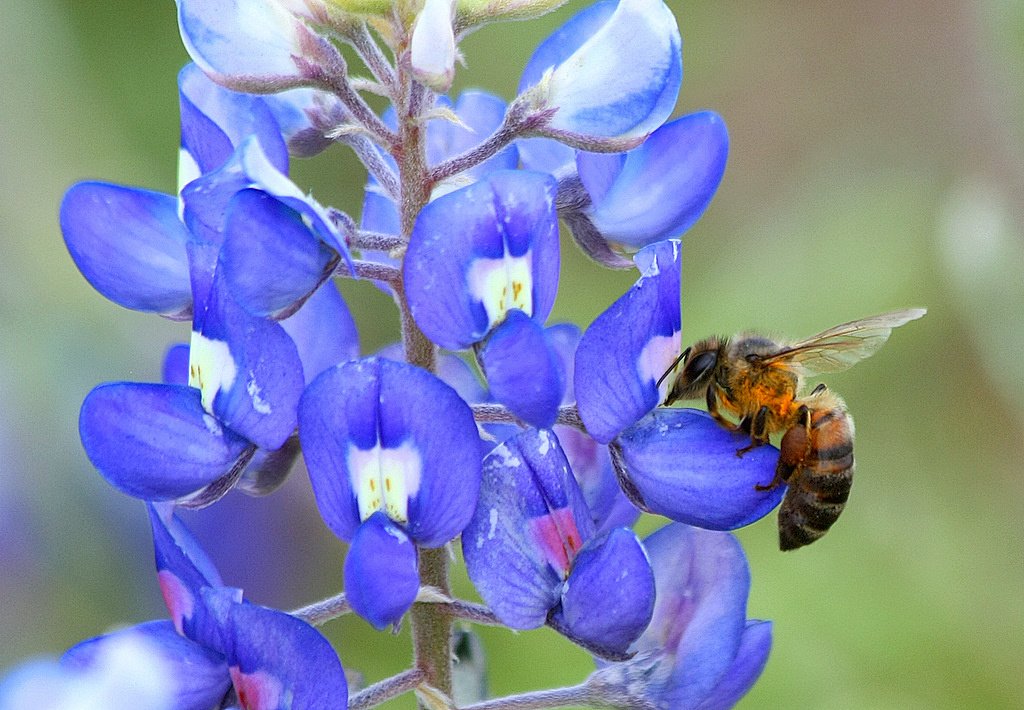
Bluebonnet
Bluebonnet (Lupinus spp.)
Overview Bluebonnets are iconic Texas wildflowers, most commonly Lupinus texensis and Lupinus subcarnosus. Known for their brilliant blue flower spikes and springtime displays, bluebonnets are annual or short-lived perennial legumes that self-seed readily. They fix nitrogen in the soil, improving soil fertility, and are a valuable nectar source for native bees and butterflies.
Light Requirements
Full sun is ideal: at least 6–8 hours of direct sunlight per day.
Tolerates light afternoon shade but will produce fewer flowers.
Soil Requirements
Well-drained soils are essential; bluebonnets do not tolerate waterlogged or compacted soils.
Prefer sandy to gravelly or rocky soils but will grow in poor, low-fertility soils.
pH: tolerate a range from slightly acidic to slightly alkaline (about pH 6.0–7.8).
Avoid rich, heavily amended garden soils; high fertility encourages foliage over blooms.
Watering Requirements
Drought-tolerant once established.
Minimal supplemental watering: water moderately at planting to establish seedlings, then hold water back. Overwatering encourages rot and weak growth.
In spring, natural rainfall is usually sufficient. If extended dry spells occur before flowering, light supplemental watering can help.
Do not water heavily during bloom; dry conditions typically yield the best floral displays.
Care Tips
Plant at the right time: sow seeds in fall (September–November) for spring blooms in most of Texas. In warmer South Texas, planting can be done in late fall/early winter.
Scarify or nick seeds and soak for 12–24 hours before planting to improve germination; this breaks the hard seed coat.
Sow seeds shallowly (1/8"–1/4") and lightly cover with soil or press into the surface; they need light soil contact.
Thin seedlings if crowded to about 6–12 inches apart to allow airflow and reduce disease.
Avoid fertilizer, especially high-nitrogen formulas. Bluebonnets perform best in low-nutrient soils.
Mowing: after the plants set seed and seedpods dry (typically late spring to early summer), you can mow or cut back to disperse seed or leave to self-seed naturally.
Pest/disease: generally low-maintenance. Watch for root rot in poorly drained soils and aphids or flea beetles occasionally. Use integrated pest management—encourage beneficial insects and use targeted, minimal controls if needed.
Rotation: if growing in beds, allow an area to rest or naturalize; repeated cultivation and heavy amendment reduce bluebonnet performance.
Companion management: keep competitive aggressive weeds and tall grasses trimmed to give seedlings light and reduce competition.
Best Planting Zones (USDA Hardiness Zones)
Best suited to USDA zones 6b–9b across Texas.
Perform well throughout most of Texas: from North Texas into Central Texas, the Hill Country, and parts of South and East Texas. Some varieties adapt better to cooler North Texas or warmer South Texas conditions.
In colder zones (below 6), bluebonnets may not reliably overwinter; they are typically grown as annuals from fall sowing.
Best Companion Plants Native to Texas Bluebonnets pair well with other Texas natives that share similar cultural needs (full sun, well-drained soils, low fertility, and spring blooming). Good companions include:
Indian Paintbrush (Castilleja indivisa) — complimentary reds and oranges; often
Bluebonnet (Lupinus spp.) — Full Summary
Overview Bluebonnets are iconic Texas wildflowers, most commonly Lupinus texensis and Lupinus subcarnosus. Known for their brilliant blue flower spikes and springtime displays, bluebonnets are annual or short-lived perennial legumes that self-seed readily. They fix nitrogen in the soil, improving soil fertility, and are a valuable nectar source for native bees and butterflies.
Light Requirements
Full sun is ideal: at least 6–8 hours of direct sunlight per day.
Tolerates light afternoon shade but will produce fewer flowers.
Soil Requirements
Well-drained soils are essential; bluebonnets do not tolerate waterlogged or compacted soils.
Prefer sandy to gravelly or rocky soils but will grow in poor, low-fertility soils.
pH: tolerate a range from slightly acidic to slightly alkaline (about pH 6.0–7.8).
Avoid rich, heavily amended garden soils; high fertility encourages foliage over blooms.
Watering Requirements
Drought-tolerant once established.
Minimal supplemental watering: water moderately at planting to establish seedlings, then hold water back. Overwatering encourages rot and weak growth.
In spring, natural rainfall is usually sufficient. If extended dry spells occur before flowering, light supplemental watering can help.
Do not water heavily during bloom; dry conditions typically yield the best floral displays.
Care Tips
Plant at the right time: sow seeds in fall (September–November) for spring blooms in most of Texas. In warmer South Texas, planting can be done in late fall/early winter.
Scarify or nick seeds and soak for 12–24 hours before planting to improve germination; this breaks the hard seed coat.
Sow seeds shallowly (1/8"–1/4") and lightly cover with soil or press into the surface; they need light soil contact.
Thin seedlings if crowded to about 6–12 inches apart to allow airflow and reduce disease.
Avoid fertilizer, especially high-nitrogen formulas. Bluebonnets perform best in low-nutrient soils.
Mowing: after the plants set seed and seedpods dry (typically late spring to early summer), you can mow or cut back to disperse seed or leave to self-seed naturally.
Pest/disease: generally low-maintenance. Watch for root rot in poorly drained soils and aphids or flea beetles occasionally. Use integrated pest management—encourage beneficial insects and use targeted, minimal controls if needed.
Rotation: if growing in beds, allow an area to rest or naturalize; repeated cultivation and heavy amendment reduce bluebonnet performance.
Companion management: keep competitive aggressive weeds and tall grasses trimmed to give seedlings light and reduce competition.
Best Planting Zones (USDA Hardiness Zones)
Best suited to USDA zones 6b–9b across Texas.
Perform well throughout most of Texas: from North Texas into Central Texas, the Hill Country, and parts of South and East Texas. Some varieties adapt better to cooler North Texas or warmer South Texas conditions.
In colder zones (below 6), bluebonnets may not reliably overwinter; they are typically grown as annuals from fall sowing.
Best Companion Plants Native to Texas Bluebonnets pair well with other Texas natives that share similar cultural needs (full sun, well-drained soils, low fertility, and spring blooming). Good companions include:
Indian Paintbrush (Castilleja indivisa) — complimentary reds and oranges; often intermix naturally.
Texas Winecup (Callirhoe involucrata) — low-growing, magenta flowers; groundcover habit.
Firewheel / Indian Blanket (Gaillardia pulchella) — bright reds/oranges; drought-tolerant.
Pink Evening Primrose (Oenothera speciosa) — soft pink blooms; spring groundcover.
Gulf Coast Penstemon (Penstemon tenuis) — tubular flowers, attracts pollinators.
Black-Eyed Susan (Rudbeckia hirta) — later blooming annual/perennial contrast.
Lanceleaf Coreopsis (Coreopsis lanceolata) — yellow daisies; long bloom period.
Gregg's Mistflower (Conoclinium greggii) — late-spring to fall color and pollinator magnet.
Little Bluestem (Schizachyrium scoparium) — native grass that adds texture and stabilizes soil; low competition.
Prairie Verbena (Glandularia bipinnatifida) — low mat-forming, attracts butterflies.
Planting combinations: mix bluebonnet seed with prairie seed mixes or scatter with other spring-blooming natives to create naturalized meadows with staggered colors and overlapping bloom periods.
Final Notes Bluebonnets
Bluebonnet (Lupinus spp.)
Overview Bluebonnets are iconic Texas wildflowers, most commonly Lupinus texensis and Lupinus subcarnosus. Known for their brilliant blue flower spikes and springtime displays, bluebonnets are annual or short-lived perennial legumes that self-seed readily. They fix nitrogen in the soil, improving soil fertility, and are a valuable nectar source for native bees and butterflies.
Light Requirements
Full sun is ideal: at least 6–8 hours of direct sunlight per day.
Tolerates light afternoon shade but will produce fewer flowers.
Soil Requirements
Well-drained soils are essential; bluebonnets do not tolerate waterlogged or compacted soils.
Prefer sandy to gravelly or rocky soils but will grow in poor, low-fertility soils.
pH: tolerate a range from slightly acidic to slightly alkaline (about pH 6.0–7.8).
Avoid rich, heavily amended garden soils; high fertility encourages foliage over blooms.
Watering Requirements
Drought-tolerant once established.
Minimal supplemental watering: water moderately at planting to establish seedlings, then hold water back. Overwatering encourages rot and weak growth.
In spring, natural rainfall is usually sufficient. If extended dry spells occur before flowering, light supplemental watering can help.
Do not water heavily during bloom; dry conditions typically yield the best floral displays.
Care Tips
Plant at the right time: sow seeds in fall (September–November) for spring blooms in most of Texas. In warmer South Texas, planting can be done in late fall/early winter.
Scarify or nick seeds and soak for 12–24 hours before planting to improve germination; this breaks the hard seed coat.
Sow seeds shallowly (1/8"–1/4") and lightly cover with soil or press into the surface; they need light soil contact.
Thin seedlings if crowded to about 6–12 inches apart to allow airflow and reduce disease.
Avoid fertilizer, especially high-nitrogen formulas. Bluebonnets perform best in low-nutrient soils.
Mowing: after the plants set seed and seedpods dry (typically late spring to early summer), you can mow or cut back to disperse seed or leave to self-seed naturally.
Pest/disease: generally low-maintenance. Watch for root rot in poorly drained soils and aphids or flea beetles occasionally. Use integrated pest management—encourage beneficial insects and use targeted, minimal controls if needed.
Rotation: if growing in beds, allow an area to rest or naturalize; repeated cultivation and heavy amendment reduce bluebonnet performance.
Companion management: keep competitive aggressive weeds and tall grasses trimmed to give seedlings light and reduce competition.
Best Planting Zones (USDA Hardiness Zones)
Best suited to USDA zones 6b–9b across Texas.
Perform well throughout most of Texas: from North Texas into Central Texas, the Hill Country, and parts of South and East Texas. Some varieties adapt better to cooler North Texas or warmer South Texas conditions.
In colder zones (below 6), bluebonnets may not reliably overwinter; they are typically grown as annuals from fall sowing.
Best Companion Plants Native to Texas Bluebonnets pair well with other Texas natives that share similar cultural needs (full sun, well-drained soils, low fertility, and spring blooming). Good companions include:
Indian Paintbrush (Castilleja indivisa) — complimentary reds and oranges; often
Bluebonnet (Lupinus spp.) — Full Summary
Overview Bluebonnets are iconic Texas wildflowers, most commonly Lupinus texensis and Lupinus subcarnosus. Known for their brilliant blue flower spikes and springtime displays, bluebonnets are annual or short-lived perennial legumes that self-seed readily. They fix nitrogen in the soil, improving soil fertility, and are a valuable nectar source for native bees and butterflies.
Light Requirements
Full sun is ideal: at least 6–8 hours of direct sunlight per day.
Tolerates light afternoon shade but will produce fewer flowers.
Soil Requirements
Well-drained soils are essential; bluebonnets do not tolerate waterlogged or compacted soils.
Prefer sandy to gravelly or rocky soils but will grow in poor, low-fertility soils.
pH: tolerate a range from slightly acidic to slightly alkaline (about pH 6.0–7.8).
Avoid rich, heavily amended garden soils; high fertility encourages foliage over blooms.
Watering Requirements
Drought-tolerant once established.
Minimal supplemental watering: water moderately at planting to establish seedlings, then hold water back. Overwatering encourages rot and weak growth.
In spring, natural rainfall is usually sufficient. If extended dry spells occur before flowering, light supplemental watering can help.
Do not water heavily during bloom; dry conditions typically yield the best floral displays.
Care Tips
Plant at the right time: sow seeds in fall (September–November) for spring blooms in most of Texas. In warmer South Texas, planting can be done in late fall/early winter.
Scarify or nick seeds and soak for 12–24 hours before planting to improve germination; this breaks the hard seed coat.
Sow seeds shallowly (1/8"–1/4") and lightly cover with soil or press into the surface; they need light soil contact.
Thin seedlings if crowded to about 6–12 inches apart to allow airflow and reduce disease.
Avoid fertilizer, especially high-nitrogen formulas. Bluebonnets perform best in low-nutrient soils.
Mowing: after the plants set seed and seedpods dry (typically late spring to early summer), you can mow or cut back to disperse seed or leave to self-seed naturally.
Pest/disease: generally low-maintenance. Watch for root rot in poorly drained soils and aphids or flea beetles occasionally. Use integrated pest management—encourage beneficial insects and use targeted, minimal controls if needed.
Rotation: if growing in beds, allow an area to rest or naturalize; repeated cultivation and heavy amendment reduce bluebonnet performance.
Companion management: keep competitive aggressive weeds and tall grasses trimmed to give seedlings light and reduce competition.
Best Planting Zones (USDA Hardiness Zones)
Best suited to USDA zones 6b–9b across Texas.
Perform well throughout most of Texas: from North Texas into Central Texas, the Hill Country, and parts of South and East Texas. Some varieties adapt better to cooler North Texas or warmer South Texas conditions.
In colder zones (below 6), bluebonnets may not reliably overwinter; they are typically grown as annuals from fall sowing.
Best Companion Plants Native to Texas Bluebonnets pair well with other Texas natives that share similar cultural needs (full sun, well-drained soils, low fertility, and spring blooming). Good companions include:
Indian Paintbrush (Castilleja indivisa) — complimentary reds and oranges; often intermix naturally.
Texas Winecup (Callirhoe involucrata) — low-growing, magenta flowers; groundcover habit.
Firewheel / Indian Blanket (Gaillardia pulchella) — bright reds/oranges; drought-tolerant.
Pink Evening Primrose (Oenothera speciosa) — soft pink blooms; spring groundcover.
Gulf Coast Penstemon (Penstemon tenuis) — tubular flowers, attracts pollinators.
Black-Eyed Susan (Rudbeckia hirta) — later blooming annual/perennial contrast.
Lanceleaf Coreopsis (Coreopsis lanceolata) — yellow daisies; long bloom period.
Gregg's Mistflower (Conoclinium greggii) — late-spring to fall color and pollinator magnet.
Little Bluestem (Schizachyrium scoparium) — native grass that adds texture and stabilizes soil; low competition.
Prairie Verbena (Glandularia bipinnatifida) — low mat-forming, attracts butterflies.
Planting combinations: mix bluebonnet seed with prairie seed mixes or scatter with other spring-blooming natives to create naturalized meadows with staggered colors and overlapping bloom periods.
Final Notes Bluebonnets