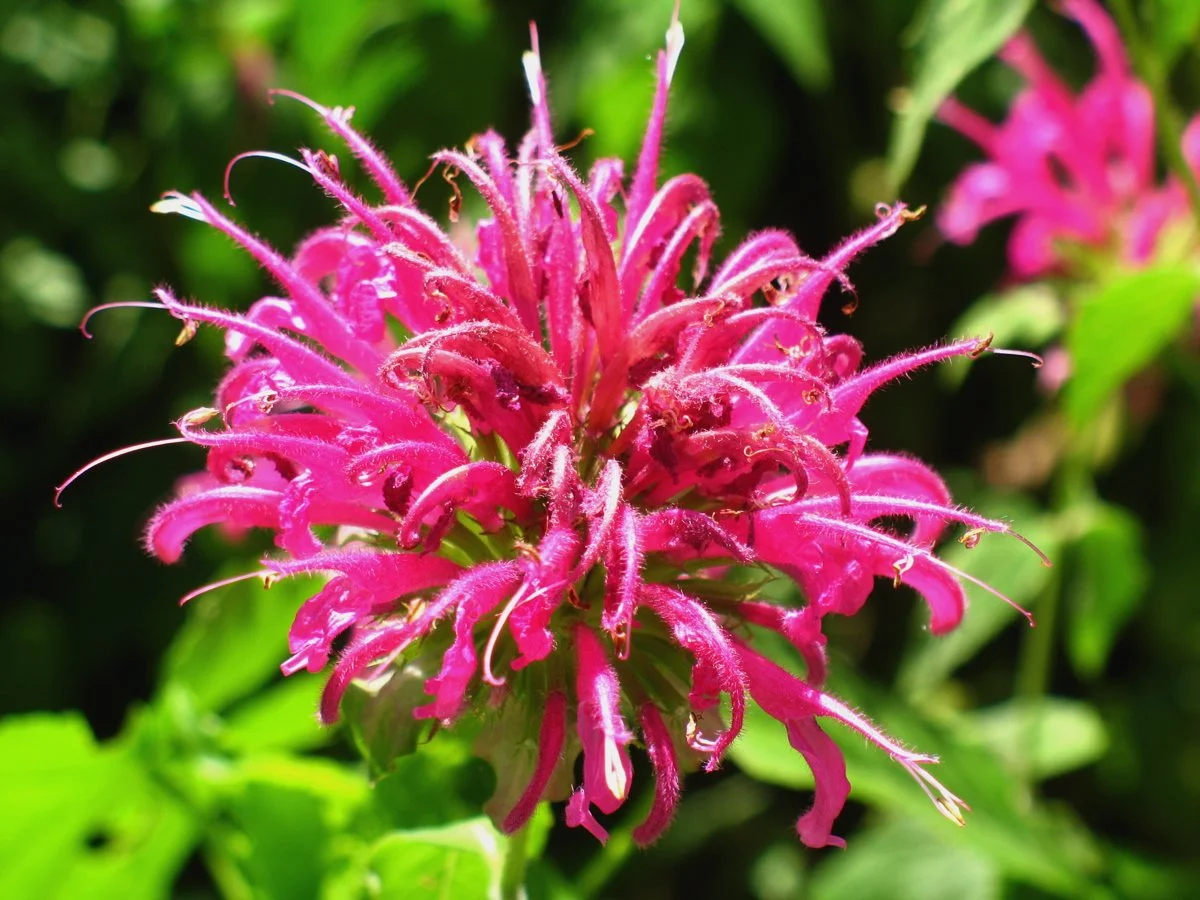
Bee Balm
Bee Balm (Monarda spp.) — Full Summary
Overview Bee balm, a group of aromatic perennial wildflowers in the Monarda genus, is beloved for its showy, tubular flowers, fragrant foliage, and ability to attract pollinators—especially bees, hummingbirds, and butterflies. Native species commonly used in Texas landscapes include Monarda fistulosa (wild bergamot) and Monarda punctata (spotted bee balm), though garden cultivars of Monarda didyma are also popular. Plants produce clusters of bracted flowers in shades of red, pink, purple, and white from late spring through summer, and they often rebloom with proper care.
Light Requirements
Full sun to part shade.
Best flower production occurs in full sun (at least 6 hours of direct sunlight daily).
In hotter parts of Texas or during summer heat, afternoon shade or filtered shade helps prevent foliage scorch and prolongs bloom.
Soil Requirements
Prefers well-drained soil.
Tolerant of a range of soil types: sandy, loamy, or clay soils with moderate fertility.
Neutral to slightly acidic pH (roughly 6.0–7.0) is ideal.
Avoid heavy, poorly drained sites—standing water leads to root rot and crown crown rot/disease.
Watering Requirements
Moderate water needs.
Establishing plants: water regularly for the first season to develop a strong root system (about 1 inch/week, more in extreme heat).
Once established, bee balm tolerates short dry spells but performs best with consistent moisture; avoid prolonged drought.
Mulch to conserve soil moisture and keep roots cool, especially in Texas summers.
Care Tips
Spacing: plant 12–24 inches apart (depending on cultivar size) to allow air circulation and reduce disease risk.
Deadheading: remove spent flower heads to encourage rebloom and tidy appearance.
Division: divide clumps every 2–3 years in spring or early fall to rejuvenate plants and control spread; bee balm can form large clumps and spread by rhizomes.
Fertilizing: generally low-maintenance—apply a light, balanced fertilizer in spring if growth is slow or soil is poor; heavy fertilization can promote soft growth that is disease-prone.
Disease management: bee balm is susceptible to powdery mildew, especially in hot, humid conditions and with poor air circulation. Reduce risk by ensuring good spacing, planting in sunnier locations, improving air flow, and avoiding overhead watering late in the day. Some mildew-resistant cultivars are available—choose those if powdery mildew is a recurring problem.
Pest notes: generally few serious pests; occasional aphids or Japanese beetles may appear—manage with insecticidal soap or hand removal as needed.
Winter care: cut back dead stems after frost. Mulch lightly in colder Texas zones to protect crowns if needed.
Best Planting Zones (USDA)
Bee balm species and cultivars generally perform well in USDA zones 4–9.
In Texas, this covers most of the state: from cooler north Texas zones (4–7) through central and southern zones (7–9). Choose local-adapted native species (M. fistulosa, M. punctata) for best long-term performance in Texas landscapes.
Best Companion Plants Native to Texas Bee balm mixes well with other native perennials that share similar light, soil, and moisture preferences and that support pollinators. Recommended Texas-native companions:
Black-eyed Susan (Rudbeckia hirta / Rudbeckia fulgida) — bright contrast and similar bloom time.
Purple Coneflower (Echinacea purpurea) — sturdy, sun-loving pollinator magnet.
Butterfly Milkweed (Asclepias tuberosa) — supports monarchs and pairs well in sunny beds.
Liatris (Liatris spicata and others) — tall spikes complement bee balm’s mounded habit.
Salvia/Texas Sage relatives (Salvia azurea, Salvia greggii) — attract hummingbirds and bees.
Texas Bluebonnet (Lupinus texensis) — spring interest when planted in mixed native meadows.
Coreopsis (Coreopsis tinctoria) — cheerful, low-maintenance partner with similar needs.
Goldenrod (Solidago spp.) — late-season nectar source and structural contrast.
Mountain Mint (Pycnanthemum spp.) — aromatic foliage and strong pollinator appeal; complements bee balm’s texture.
Planting and Design Tips
Use bee balm in pollinator gardens, cottage-style borders, native wildflower meadows, and mixed perennial beds.
Combine with plants of varying heights and bloom times to extend interest and nectar availability throughout the season.
In tighter spaces or areas prone
Bee Balm (Monarda spp.) — Full Summary
Overview Bee balm, a group of aromatic perennial wildflowers in the Monarda genus, is beloved for its showy, tubular flowers, fragrant foliage, and ability to attract pollinators—especially bees, hummingbirds, and butterflies. Native species commonly used in Texas landscapes include Monarda fistulosa (wild bergamot) and Monarda punctata (spotted bee balm), though garden cultivars of Monarda didyma are also popular. Plants produce clusters of bracted flowers in shades of red, pink, purple, and white from late spring through summer, and they often rebloom with proper care.
Light Requirements
Full sun to part shade.
Best flower production occurs in full sun (at least 6 hours of direct sunlight daily).
In hotter parts of Texas or during summer heat, afternoon shade or filtered shade helps prevent foliage scorch and prolongs bloom.
Soil Requirements
Prefers well-drained soil.
Tolerant of a range of soil types: sandy, loamy, or clay soils with moderate fertility.
Neutral to slightly acidic pH (roughly 6.0–7.0) is ideal.
Avoid heavy, poorly drained sites—standing water leads to root rot and crown crown rot/disease.
Watering Requirements
Moderate water needs.
Establishing plants: water regularly for the first season to develop a strong root system (about 1 inch/week, more in extreme heat).
Once established, bee balm tolerates short dry spells but performs best with consistent moisture; avoid prolonged drought.
Mulch to conserve soil moisture and keep roots cool, especially in Texas summers.
Care Tips
Spacing: plant 12–24 inches apart (depending on cultivar size) to allow air circulation and reduce disease risk.
Deadheading: remove spent flower heads to encourage rebloom and tidy appearance.
Division: divide clumps every 2–3 years in spring or early fall to rejuvenate plants and control spread; bee balm can form large clumps and spread by rhizomes.
Fertilizing: generally low-maintenance—apply a light, balanced fertilizer in spring if growth is slow or soil is poor; heavy fertilization can promote soft growth that is disease-prone.
Disease management: bee balm is susceptible to powdery mildew, especially in hot, humid conditions and with poor air circulation. Reduce risk by ensuring good spacing, planting in sunnier locations, improving air flow, and avoiding overhead watering late in the day. Some mildew-resistant cultivars are available—choose those if powdery mildew is a recurring problem.
Pest notes: generally few serious pests; occasional aphids or Japanese beetles may appear—manage with insecticidal soap or hand removal as needed.
Winter care: cut back dead stems after frost. Mulch lightly in colder Texas zones to protect crowns if needed.
Best Planting Zones (USDA)
Bee balm species and cultivars generally perform well in USDA zones 4–9.
In Texas, this covers most of the state: from cooler north Texas zones (4–7) through central and southern zones (7–9). Choose local-adapted native species (M. fistulosa, M. punctata) for best long-term performance in Texas landscapes.
Best Companion Plants Native to Texas Bee balm mixes well with other native perennials that share similar light, soil, and moisture preferences and that support pollinators. Recommended Texas-native companions:
Black-eyed Susan (Rudbeckia hirta / Rudbeckia fulgida) — bright contrast and similar bloom time.
Purple Coneflower (Echinacea purpurea) — sturdy, sun-loving pollinator magnet.
Butterfly Milkweed (Asclepias tuberosa) — supports monarchs and pairs well in sunny beds.
Liatris (Liatris spicata and others) — tall spikes complement bee balm’s mounded habit.
Salvia/Texas Sage relatives (Salvia azurea, Salvia greggii) — attract hummingbirds and bees.
Texas Bluebonnet (Lupinus texensis) — spring interest when planted in mixed native meadows.
Coreopsis (Coreopsis tinctoria) — cheerful, low-maintenance partner with similar needs.
Goldenrod (Solidago spp.) — late-season nectar source and structural contrast.
Mountain Mint (Pycnanthemum spp.) — aromatic foliage and strong pollinator appeal; complements bee balm’s texture.
Planting and Design Tips
Use bee balm in pollinator gardens, cottage-style borders, native wildflower meadows, and mixed perennial beds.
Combine with plants of varying heights and bloom times to extend interest and nectar availability throughout the season.
In tighter spaces or areas prone