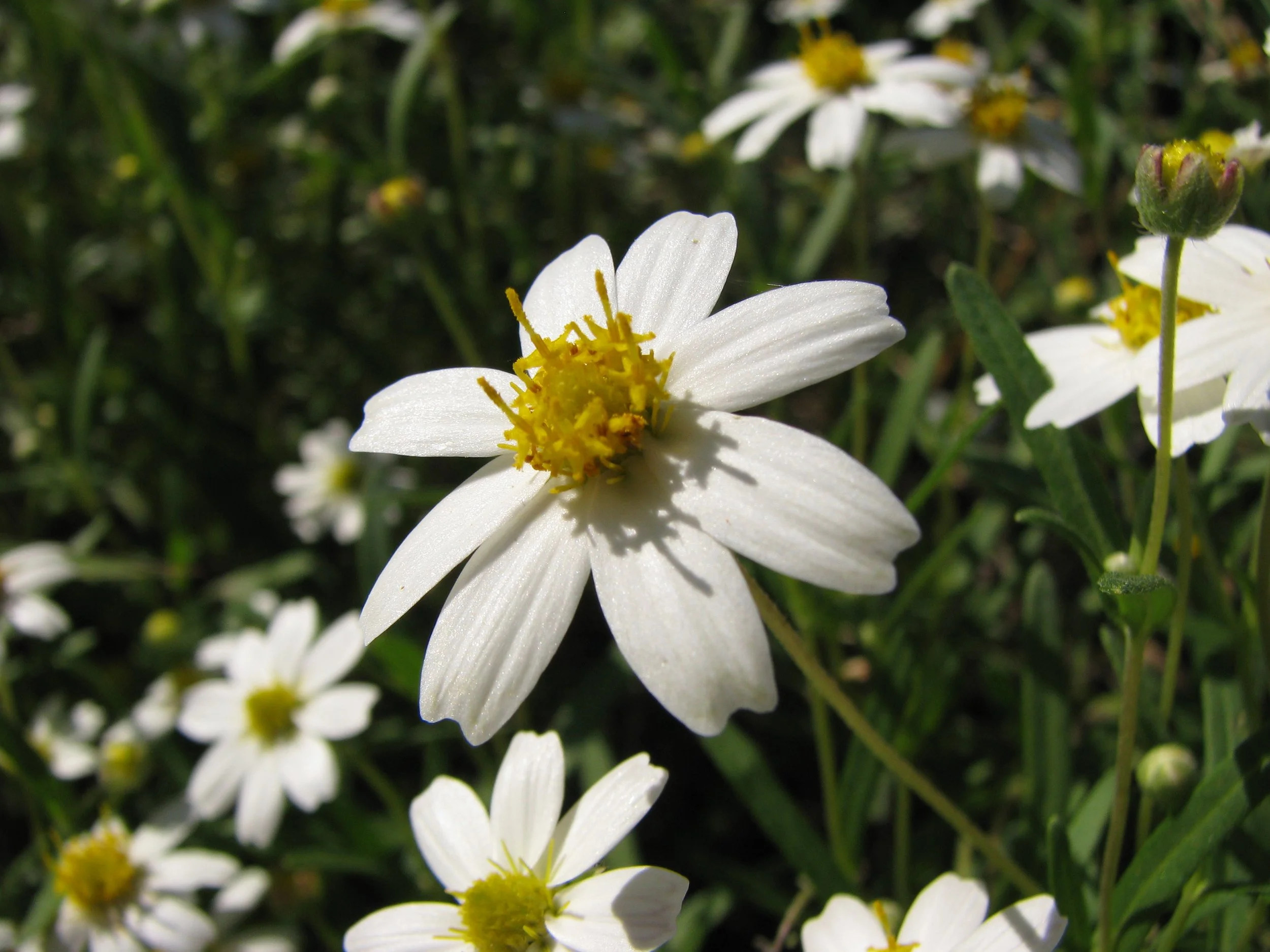
Blackfoot Daisy
Blackfoot Daisy (Melampodium leucanthum)
Overview Blackfoot daisy is a low-growing, hardy perennial native to the southwestern United States and northern Mexico. In Texas landscapes it is prized for its long season of white daisy-like flowers with yellow centers, silvery-gray foliage, and ability to thrive in hot, dry conditions. It forms tidy mounds 6–12 inches tall and spreads by basal branching, making it excellent for rock gardens, edging, dry borders, and pollinator-friendly planting.
Light Requirements
Full sun is best: at least 6–8 hours of direct sun per day.
Tolerates light afternoon shade in the hottest inland regions, but flowering will be reduced.
Performs poorly in deep shade (sparse flowering and leggy growth).
Soil Requirements
Prefers well-draining soils: sandy, gravelly, or rocky soils are ideal.
Tolerates poor, low-fertility soils; rich, heavy clay or overly amended soils can reduce flowering and encourage floppy growth.
pH: adaptable across a broad range but typically does well in neutral to slightly alkaline soils often found in Texas limestone areas.
If planting in heavier soils, improve drainage by adding coarse sand or gravel and planting on a slight rise or mound.
Watering Requirements
Drought-tolerant once established.
Water moderately at establishment for the first few weeks, then allow soil to dry between waterings.
In well-draining soil, supplemental watering during prolonged drought will help maintain vigor but avoid overwatering—soggy soil causes root rot.
Typical schedule: deep watering every 7–14 days in hot, dry spells if no rainfall; less often in spring and fall.
Care Tips
Planting time: Best planted in spring after last frost or in fall in mild-winter areas for root establishment.
Spacing: 12–18 inches apart to allow mounding and air circulation.
Pruning: Deadhead spent flowers to encourage continuous bloom. A light trim (shear back by one-third) in late winter or early spring promotes fresh growth and a compact habit.
Fertilizer: Minimal feeding needed. If growth is weak, apply a light, balanced slow-release fertilizer in spring. Avoid high-nitrogen applications that encourage foliage over flowers.
Mulch: Use a thin layer of gravel mulch or light organic mulch to conserve moisture and reflect heat. Keep mulch away from the crown to prevent crown rot.
Pests/diseases: Generally pest-resistant. Watch for occasional aphids or spider mites; treat lightly if needed. Poor drainage can lead to fungal root diseases.
Winter care: Hardy and evergreen in mild winters; in colder zones it may die back but often resprouts. Remove dead foliage in late winter.
Best Planting Zones
USDA Hardiness Zones: typically 6–10. In Texas, it is well-suited statewide but especially reliable in Zones 7–10.
Performs best in hot, arid to semi-arid parts of Texas (West Texas, South Texas, and central areas); also works well in urban and coastal sites with well-draining soil.
Best Companion Plants Native to Texas Choose companions that share drought tolerance, sun preference, and well-draining soil needs:
Texas Sage (Leucophyllum frutescens) — shrub that offers complementary form and late-season color.
Autumn Sage (Salvia greggii) — provides vertical contrast and attracts hummingbirds.
Gregg’s Mistflower (Conoclinium greggii) — low-growing native that blooms late summer/fall; good pollinator plant.
Purple Coneflower (Echinacea purpurea) — taller structural partner, pollinator-friendly.
Lantana (Lantana urticoides / native varieties) — heat- and drought-tolerant, colorful blooms.
Gulf Coast Penstemon (Penstemon tenuis) — vertical spikes and similar water needs.
Rockrose (Pavonia lasiopetala) — shrubby, drought-tolerant, and complementary bloom season.
Texas Horehound / Mountain Mint (Pycnanthemum torreyi or Monarda citriodora where native) — aromatic, attracts pollinators.
Prairie Verbena (Glandularia bipinnatifida) — low, spreading color that pairs well with blackfoot daisy in borders and rock gardens.
Landscape Uses
Groundcover or edging in xeriscapes and rock gardens.
Pollinator gardens—provides nectar to bees and butterflies.
Gravel or container plantings where drainage is excellent.
Low-maintenance mass plantings for long bloom displays.
Summary Blackfoot daisy is a tough, low-growing Texas-friendly perennial that thrives in full sun and well-draining soils
Blackfoot Daisy (Melampodium leucanthum)
Overview Blackfoot daisy is a low-growing, hardy perennial native to the southwestern United States and northern Mexico. In Texas landscapes it is prized for its long season of white daisy-like flowers with yellow centers, silvery-gray foliage, and ability to thrive in hot, dry conditions. It forms tidy mounds 6–12 inches tall and spreads by basal branching, making it excellent for rock gardens, edging, dry borders, and pollinator-friendly planting.
Light Requirements
Full sun is best: at least 6–8 hours of direct sun per day.
Tolerates light afternoon shade in the hottest inland regions, but flowering will be reduced.
Performs poorly in deep shade (sparse flowering and leggy growth).
Soil Requirements
Prefers well-draining soils: sandy, gravelly, or rocky soils are ideal.
Tolerates poor, low-fertility soils; rich, heavy clay or overly amended soils can reduce flowering and encourage floppy growth.
pH: adaptable across a broad range but typically does well in neutral to slightly alkaline soils often found in Texas limestone areas.
If planting in heavier soils, improve drainage by adding coarse sand or gravel and planting on a slight rise or mound.
Watering Requirements
Drought-tolerant once established.
Water moderately at establishment for the first few weeks, then allow soil to dry between waterings.
In well-draining soil, supplemental watering during prolonged drought will help maintain vigor but avoid overwatering—soggy soil causes root rot.
Typical schedule: deep watering every 7–14 days in hot, dry spells if no rainfall; less often in spring and fall.
Care Tips
Planting time: Best planted in spring after last frost or in fall in mild-winter areas for root establishment.
Spacing: 12–18 inches apart to allow mounding and air circulation.
Pruning: Deadhead spent flowers to encourage continuous bloom. A light trim (shear back by one-third) in late winter or early spring promotes fresh growth and a compact habit.
Fertilizer: Minimal feeding needed. If growth is weak, apply a light, balanced slow-release fertilizer in spring. Avoid high-nitrogen applications that encourage foliage over flowers.
Mulch: Use a thin layer of gravel mulch or light organic mulch to conserve moisture and reflect heat. Keep mulch away from the crown to prevent crown rot.
Pests/diseases: Generally pest-resistant. Watch for occasional aphids or spider mites; treat lightly if needed. Poor drainage can lead to fungal root diseases.
Winter care: Hardy and evergreen in mild winters; in colder zones it may die back but often resprouts. Remove dead foliage in late winter.
Best Planting Zones
USDA Hardiness Zones: typically 6–10. In Texas, it is well-suited statewide but especially reliable in Zones 7–10.
Performs best in hot, arid to semi-arid parts of Texas (West Texas, South Texas, and central areas); also works well in urban and coastal sites with well-draining soil.
Best Companion Plants Native to Texas Choose companions that share drought tolerance, sun preference, and well-draining soil needs:
Texas Sage (Leucophyllum frutescens) — shrub that offers complementary form and late-season color.
Autumn Sage (Salvia greggii) — provides vertical contrast and attracts hummingbirds.
Gregg’s Mistflower (Conoclinium greggii) — low-growing native that blooms late summer/fall; good pollinator plant.
Purple Coneflower (Echinacea purpurea) — taller structural partner, pollinator-friendly.
Lantana (Lantana urticoides / native varieties) — heat- and drought-tolerant, colorful blooms.
Gulf Coast Penstemon (Penstemon tenuis) — vertical spikes and similar water needs.
Rockrose (Pavonia lasiopetala) — shrubby, drought-tolerant, and complementary bloom season.
Texas Horehound / Mountain Mint (Pycnanthemum torreyi or Monarda citriodora where native) — aromatic, attracts pollinators.
Prairie Verbena (Glandularia bipinnatifida) — low, spreading color that pairs well with blackfoot daisy in borders and rock gardens.
Landscape Uses
Groundcover or edging in xeriscapes and rock gardens.
Pollinator gardens—provides nectar to bees and butterflies.
Gravel or container plantings where drainage is excellent.
Low-maintenance mass plantings for long bloom displays.
Summary Blackfoot daisy is a tough, low-growing Texas-friendly perennial that thrives in full sun and well-draining soils